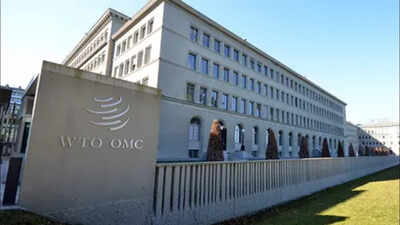
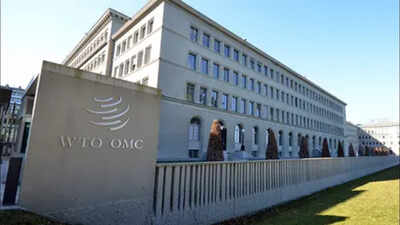
India will need to address structural challenges such as high trade costs, regulatory complexity, infrastructure gaps and barriers to deeper global integration if it is to achieve its ambition of becoming a developed nation by 2047, according to the World Trade Organisation’s (WTO) latest Trade Policy Review (TPR) report.The report said India remained the fastest-growing G20 economy during the review period and was expected to maintain strong momentum, but warned that sustaining this growth over the long term would require deeper structural reforms to improve competitiveness and attract greater investment.
What WTO report said
According to the Trade Policy Review report prepared by the WTO Secretariat, India’s real GDP growth is projected to remain between 6.8% and 7.2% in FY2027-28, continuing the strong performance recorded during the review period.“Looking further ahead, sustaining the strong economic performance needed to reach the Viksit Bharat vision of a developed India by 2047 will require addressing structural challenges, including high trade costs, regulatory complexity, infrastructure gaps, and barriers to deeper global integration,” the report said.The WTO acknowledged India’s progress in financial inclusion and noted improvements in trade facilitation through digitalisation, customs modernisation, liberalisation of foreign direct investment (FDI) rules and the expansion of regional trade agreements.However, it also pointed out that India’s policy framework continues to include relatively high tariffs, import and export controls, state trading measures and extensive budgetary support programmes, particularly for food grains and fertilisers.According to the report, building on administrative reforms, including the Jan Vishwas (Amendment of Provisions) Acts, further efforts to improve the ease of doing business, boost productivity and reduce reliance on trade-restrictive measures could help allocate resources more efficiently and attract foreign investment.The WTO added that as India seeks to diversify exports and expand its role in global trade, balancing self-reliance with greater openness, along with active engagement in the multilateral trading system, would remain key to future growth and economic resilience.
India’s FTA push and export growth
The report highlighted that India has increasingly relied on free trade agreements (FTAs) to improve market access and integrate more deeply into global value chains.India currently has 19 active FTAs, and since 2021 has signed or concluded negotiations on eight major trade agreements.“This renewed momentum reflects a strategic shift towards securing durable market access, reducing tariff and non-tariff barriers, and linking Indian exporters with regional and global value chains,” the report said.According to the WTO, India’s combined merchandise and services exports reached a record $863.1 billion in 2025-26, up 6.3% from $676.5 billion in 2021-22.
Global headwinds remain a concern
The WTO noted that India’s trade performance in recent years has also been affected by external shocks, including the Covid-19 pandemic, geopolitical tensions, climate-related disruptions and export restrictions imposed by some countries.These developments, it said, disrupted global supply chains and increased the cost and availability of critical inputs for Indian industries.The report also highlighted growing use of non-tariff measures by some trading partners, including complex standards, conformity assessment procedures and regulatory requirements, which have constrained market access for Indian exporters.
India reiterates support for rules-based trade
Meanwhile, commerce secretary Rajesh Agrawal reaffirmed India’s commitment to a transparent, rules-based and development-oriented multilateral trading system during the country’s eighth Trade Policy Review at the WTO.Sharing details of the opening day of the review, Agrawal said India’s economic journey during the review period had been defined by “resilience, reform and renewed ambition” despite a challenging global environment.According to ANI, he said India remained the world’s fastest-growing major economy during the period while recording all-time high exports, accelerating digital transformation, improving ease of doing business and expanding opportunities for trade and investment.“The Trade Policy Review is an opportunity for Members to understand the broader developmental context of our policy choices and engage in constructive dialogue. I also reiterated India’s commitment to a transparent, rules-based and development-oriented multilateral trading system with the WTO at its core,” Agrawal said.
What is WTO Trade Policy Review?
The Trade Policy Review is the WTO’s transparency mechanism under which member countries undergo periodic peer reviews of their trade policies.The exercise is conducted by the WTO’s Trade Policy Review Body and is based on two documents — a policy statement submitted by the country under review and an independent assessment prepared by the WTO Secretariat.India undergoes a Trade Policy Review once every five years. The latest review is the country’s eighth, covering the period from January 1, 2021, to December 31, 2025.