Meet Thorin Jonsson, the biologist who used 165-million-year-old insect wings to recreate the sounds of a Jurassic forest |

Meet Thorin Jonsson, the biologist who used 165-million-year-old insect wings to recreate the sounds of a Jurassic forest |

Millions of years ago, several species produced higher frequencies, just like the native leaf grasshopper. Image Credit: Thoris Jonsson/University of Graz Jurassic World was not silent. Around 165 million years ago, forests in present day Inner Mongolia were filled with the calls of insects communicating through sounds that ranged from low tones to frequencies beyond … Read more

A Michigan scientist buried seeds in 20 glass bottles in 1879; 142 years later, some still grew, and the experiment is set to run until 2100

A Michigan scientist buried seeds in 20 glass bottles in 1879; 142 years later, some still grew, and the experiment is set to run until 2100

Michigan State University botanist William James Beal buried 20 glass bottles filled with seeds In 1879, Michigan State University botanist William James Beal buried 20 glass bottles filled with seeds and sand in an effort to answer a deceptively simple question: how long could seeds remain dormant in the soil and still grow when conditions … Read more

A pigeon with a ‘bleeding heart’ has returned after 20 years: Rare Philippine bird spotted in 2026, but why its comeback may not be good news

A pigeon with a ‘bleeding heart’ has returned after 20 years: Rare Philippine bird spotted in 2026, but why its comeback may not be good news

A camera on the Philippine island of Mindoro captured one of the country’s rarest birds, confirming that the critically endangered Mindoro bleeding-heart pigeon still survives in the wild. The bird was spotted in August in the Puerto Galera rainforest, and is the first confirmed photograph of the species Gallicolumba platenae in two decades, according to … Read more

Communities marry glaciers in Gilgit-Baltistan to create artificial glaciers as climate change threatens water supplies |

Communities marry glaciers in Gilgit-Baltistan to create artificial glaciers as climate change threatens water supplies |

High in the mountains of Gilgit-Baltistan, communities are reviving an age-old practice to answer a modern water crisis: they are ‘marrying’ glaciers. As natural glaciers shrink and meltwater becomes less reliable, local people are carrying pieces of ice from existing glaciers to carefully chosen sites, where male and female ice are brought together and buried … Read more

Nearly 70 years after Tucson’s Santa Cruz River ran dry, 2.8 million gallons of reclaimed water began flowing daily; within 4 months, 37 dragonfly and damselfly species were recorded

Nearly 70 years after Tucson’s Santa Cruz River ran dry, 2.8 million gallons of reclaimed water began flowing daily; within 4 months, 37 dragonfly and damselfly species were recorded

damselflyRepresenative image from Canva For much of the 20th century, the Santa Cruz River that winds through Tucson, Arizona, existed more as a memory than a living waterway. Groundwater pumping, drought and urban growth drained the riverbed, leaving long stretches of dry sand and scattered pools. Then, in a quiet but transformative experiment, treated wastewater, … Read more

In 2016, conservationists put the bends back into a Lake District river straightened 200 years earlier; within months, Atlantic salmon were spawning there for the first time in centuries

In 2016, conservationists put the bends back into a Lake District river straightened 200 years earlier; within months, Atlantic salmon were spawning there for the first time in centuries

Centuries after people forced a Cumbrian river into a straight, artificial channel, nature has reclaimed its original course in the Lake District, bringing endangered wild fish back to historic spawning grounds almost immediately. In the summer of 2016, conservationists restored a 1.1-kilometre stretch of Swindale Beck near Haweswater by putting its natural bends back into … Read more

In 2007, ESA exposed 3,000 tardigrades to space vacuum and solar UV radiation in low Earth orbit; 68% revived when the microscopic animals were rehydrated |

In 2007, ESA exposed 3,000 tardigrades to space vacuum and solar UV radiation in low Earth orbit; 68% revived when the microscopic animals were rehydrated |

In September 2007, the European Space Agency launched roughly 3,000 tardigrades into low Earth orbit aboard the Biopan-6 platform on the FOTON-M3 mission. Known as water bears, these microscopic animals were dried into a dormant state before being exposed directly to the vacuum of space, alongside doses of solar and cosmic radiation, for ten days … Read more

A fungus turns beetles into zombies and makes them die on flowers; scientists say the timing helps infect the next generation |

A fungus turns beetles into zombies and makes them die on flowers; scientists say the timing helps infect the next generation |

A fungus infecting goldenrod soldier beetles can alter their behaviour before death and cause changes to their bodies afterwards. Researchers investigating Eryniopsis lampyridarum found infected Chauliognathus pensylvanicus beetles clamped their mandibles tightly onto flower heads shortly before dying. Between 15 and 22 hours after death, the fungus caused the beetles to raise their hardened forewings … Read more

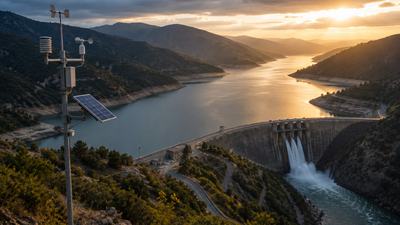
A California reservoir forecasting system could add enough usable water to save $100 million to $200 million a year without building a new reservoir, a study estimates

A California reservoir forecasting system could add enough usable water to save 0 million to 0 million a year without building a new reservoir, a study estimates

Representative Image (AI-generated) California’s water problem is often framed around the need for more storage, new infrastructure and expensive construction. But a new study suggests that part of the answer may already be sitting behind the state’s existing dams. By using better weather and water forecasts to decide when reservoirs should release or retain water, … Read more

Scientists released up to 45,000 cubic feet of water per second from Glen Canyon Dam for 8 days in 1996; the artificial flood rebuilt Grand Canyon sandbars

Scientists released up to 45,000 cubic feet of water per second from Glen Canyon Dam for 8 days in 1996; the artificial flood rebuilt Grand Canyon sandbars

Glen Canyon Dam (Image Credit: Canva) For eight days in 1996, the Colorado River through the Grand Canyon experienced something unusual: a deliberately created flood. Scientists working with the U.S. Geological Survey (USGS) and other agencies used Glen Canyon Dam to release water at rates reaching 45,000 cubic feet per second, creating a massive controlled … Read more